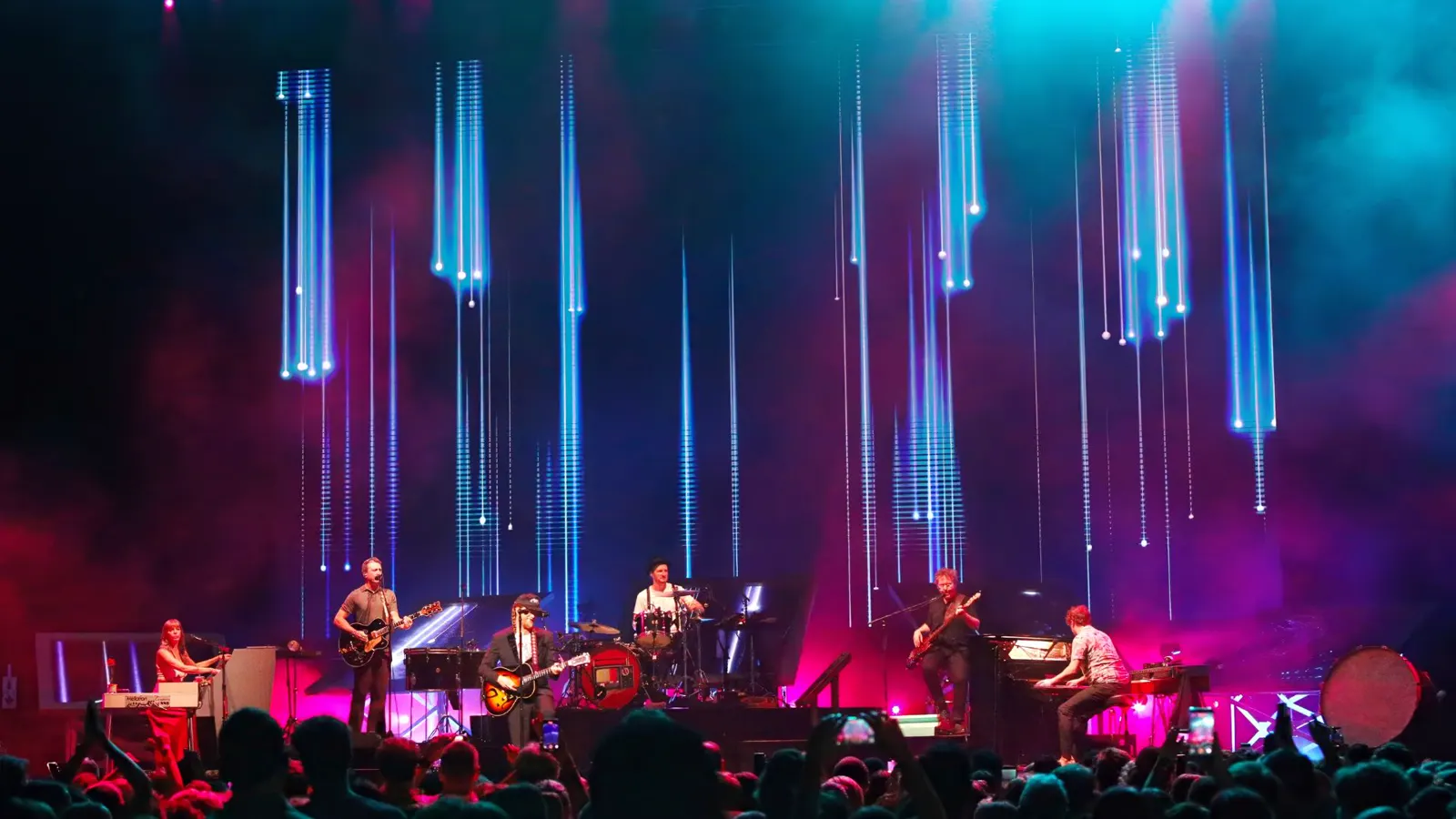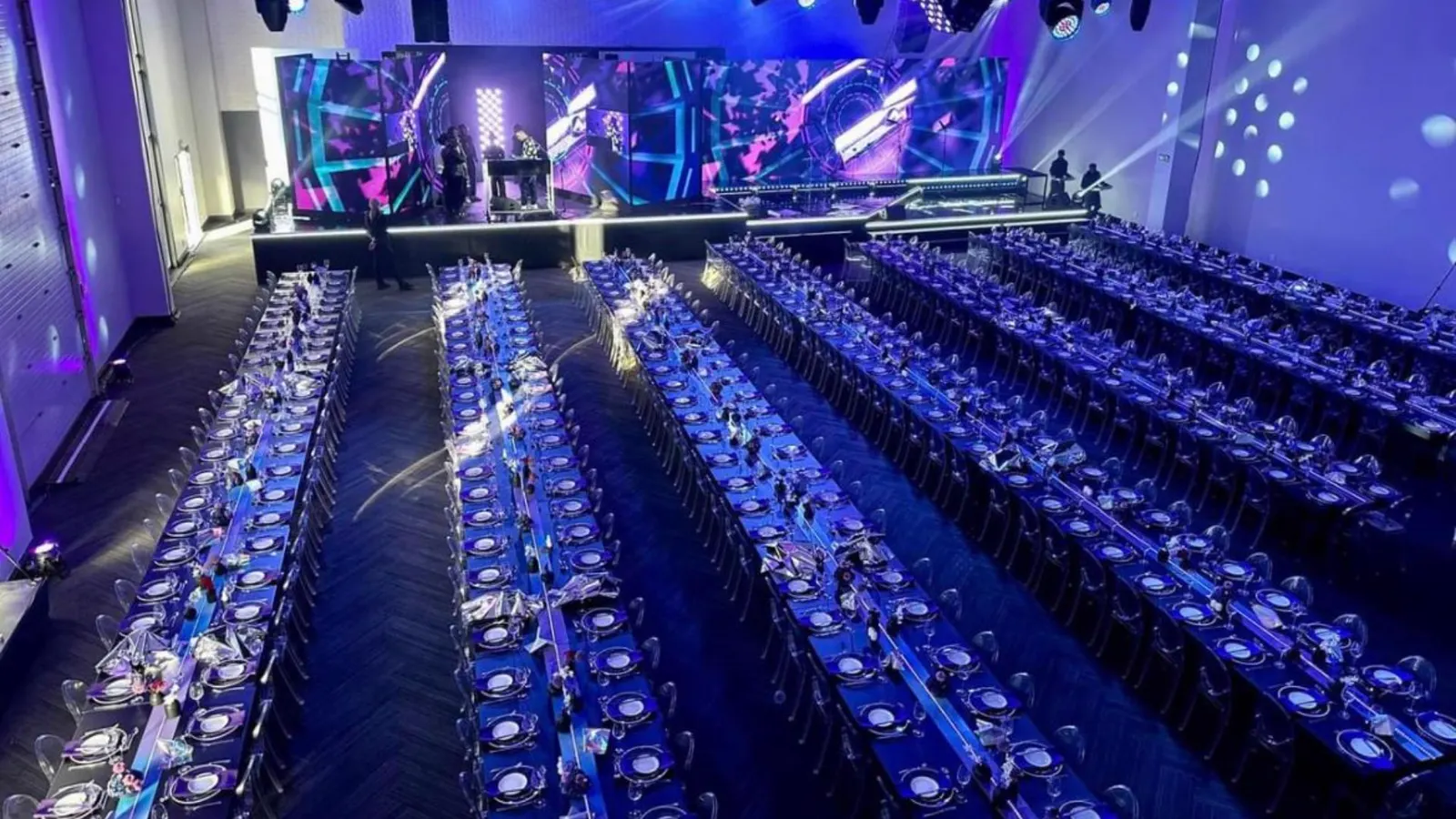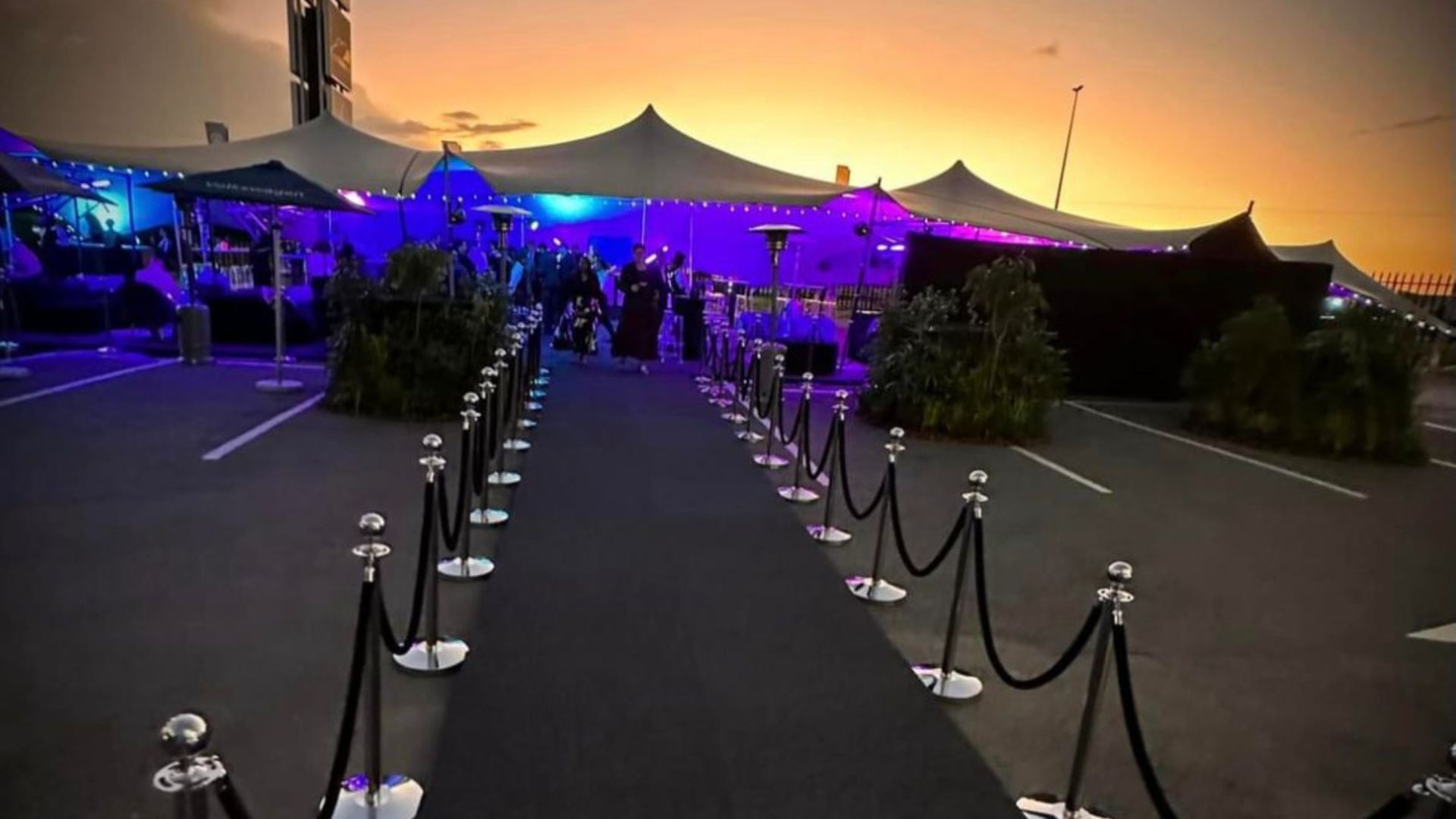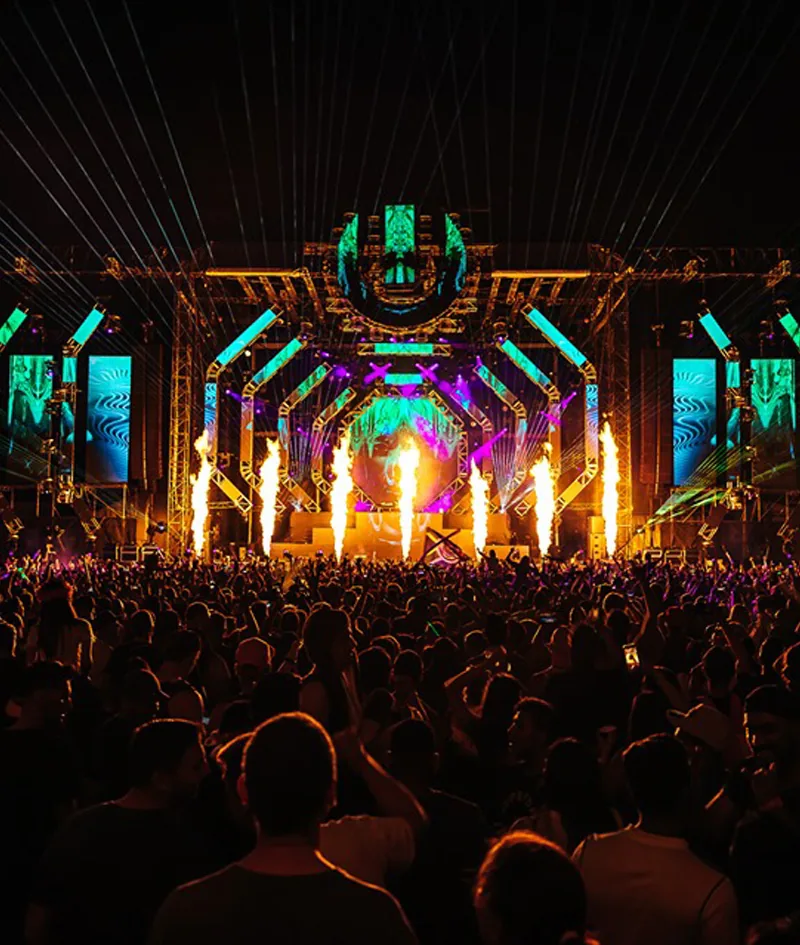
Johannesburg carries much of South Africa's large-scale event calendar. Stadium concerts, international conferences, product launches, award ceremonies and major sporting fixtures all compete for the same venues, crews and dates. The city rewards organisers who plan properly and punishes shortcuts quickly: afternoon storms, gridlocked load-ins and a layered approvals process have derailed more events than any technical failure.
Mushroom Productions has produced events across Africa for more than three decades, including the Global Citizen Festival: Mandela 100 at FNB Stadium in 2018. This guide covers what we plan for every time we produce in Johannesburg: venues, weather, power, logistics, approvals and a realistic timeline.
Why Johannesburg Works for Large-Scale Events
Johannesburg combines things few African cities offer together. OR Tambo International Airport is the continent's busiest aviation hub, which simplifies bringing in international artists, speakers and equipment. Sandton and Rosebank host a large share of South Africa's corporate head offices, so the audience for launches and conferences is often already in the city. Gauteng also has the country's deepest base of technical suppliers and experienced event crew, which keeps freight costs and risk down on complex builds.
The trade-off is competition. Popular venues and peak-season dates book early, and the best crews are committed months ahead.
Choosing the Right Venue Type
The venue decision shapes every production decision after it, so involve your production team before you sign a venue contract. Our venue sourcing and design work starts with the same question every time: what does this space make easy, and what will it cost to overcome?
Stadiums
FNB Stadium in Soweto is the largest stadium in Africa, with a capacity of roughly 94,000. Emirates Airline Park (Ellis Park) and Orlando Stadium give organisers further large-capacity options. Stadium events need certified spectator capacities, pitch protection, stage positioning that respects sightlines and broadcast angles, and an overlay of temporary infrastructure on top of what the venue provides. Curfews and noise conditions also shape how late a show can run.
Convention and exhibition centres
Sandton Convention Centre, Gallagher Convention Centre in Midrand and the Johannesburg Expo Centre at Nasrec handle most of the city's conferences, exhibitions and gala events. Check rigging points and their rated loads, floor loading limits, loading dock access and in-house supplier rules early. Some venues require you to use their own AV or catering partners, which changes your budget and your production design.
Indoor arenas
Arenas such as the Ticketpro Dome suit concerts, award ceremonies and sports-entertainment events that need a controlled environment. They remove weather risk but add constraints on rigging, staging footprint and load-in time.
Open-air and greenfield sites
Parks, polo fields and open land offer the most creative freedom and the most work. Power, water, sanitation, fencing, roads, lighting and shelter all have to be brought in and certified. Budget and timeline both grow accordingly.
Planning Around Highveld Weather
Johannesburg's climate is one of the most underestimated production risks.
Summer storms. From roughly November to March, afternoon thunderstorms are frequent and can be violent, bringing lightning, hail and strong gusts. Every outdoor Johannesburg event we produce has a written lightning and severe-weather plan. It covers who monitors conditions, the thresholds for pausing and resuming the show, how the audience is sheltered or held, and how stages, roofs and LED screens are secured against wind loading. Scheduling key moments for later in the evening, after the typical storm window, is often a simple and effective mitigation.
Winter nights. Winters are dry and clear, but evening temperatures drop sharply. Audience comfort, performer warm-up areas, heating for hospitality spaces and the effect of cold on equipment all need planning.
Altitude. Johannesburg sits at around 1,750 metres above sea level. Combustion-engine generators produce less power at altitude, so generator capacity must be sized for local conditions rather than taken from sea-level specifications. Visiting performers and athletes may also feel the altitude, which matters for programming and backstage provisions.
Power and Infrastructure
Never assume grid power will carry a large event. For any production of scale we specify standalone generator power with redundancy for critical systems: show control, communications, medical points, emergency lighting and the public address system used for safety announcements. A proper power plan covers fuel logistics for the full build, show and de-rig, distribution across the site, and who is responsible for each system if something fails.
Water, sanitation and waste management scale with audience size and duration, and on greenfield sites they are a significant part of the infrastructure budget.
Getting People and Equipment In and Out
Load-in and load-out. Traffic around Sandton, the M1 and the N1 can turn a 30-minute truck run into a three-hour one during peak periods. We schedule heavy deliveries for off-peak and overnight windows wherever venues allow, and build buffer time into every build schedule. If your event needs road closures or temporary traffic arrangements, these require approval from the Johannesburg Roads Agency (JRA) and the Johannesburg Metropolitan Police Department (JMPD).
Audience movement. For large audiences, egress planning matters as much as arrival. The Gautrain links OR Tambo, Sandton, Rosebank and Park Station, and can form part of a transport plan alongside park-and-ride sites, shuttle services and dedicated e-hailing pick-up zones. A clear transport plan reduces congestion, improves safety and is often a condition of approval.
Crew and suppliers. Johannesburg's supplier base is deep, but the best crews book early in busy seasons. Locking in your production partner early secures the people as well as the equipment.
Approvals and Compliance in Johannesburg
Large events in Johannesburg are governed by national law and city by-laws working together.
At national level, the Safety at Sports and Recreational Events Act, 2010 (SASREA) applies to events at stadiums and venues certified for 2,000 or more spectators, and to events held along a route. The South African Police Service categorises these events as low, medium or high risk, and that categorisation drives what safety measures are required.
At city level, the City of Johannesburg's Joint Operations Committee (JOC) coordinates approval across departments, including JMPD, Emergency Management Services, Disaster Management and Environmental Health. Expect to submit event plans, site layouts, temporary structure details and proof of public liability insurance. Noise exemptions and road-use approvals are separate applications. The City of Johannesburg's guidance for hosting public events sets out the process, and the JMPD expects event applications at least 30 days before the event.
For a deeper explanation of the national requirements, read our guide to event safety compliance in South Africa.
A Realistic Timeline for a Large Johannesburg Event
| When | What should be happening |
|---|---|
| 9–12 months out | Venue secured, date confirmed, production partner appointed, high-level production concept agreed |
| 6 months out | Production design developed around venue constraints, key suppliers contracted, safety officer appointed, early engagement with SAPS and the City |
| 3 months out | Site plans, structural designs and power plans finalised; transport and weather plans drafted |
| 60 days out | High-risk event safety certificate application submitted, where the event is categorised as high risk |
| 30 days out | City and JMPD applications complete, safety and security plans distributed to role-players |
| Build week | Site build, technical rigging, safety inspections and sign-offs, rehearsals |
| Show day and after | Event delivery, egress management, de-rig and site handover |
Corporate events in convention centres can run on shorter timelines. Stadium shows, festivals and anything involving temporary structures or road closures should not.
What Your Production Partner Should Take Off Your Plate
The right production partner gives you one accountable team across design, technical delivery and compliance. In practice that means designing the show around the venue's real constraints, preparing the technical documentation authorities ask for, coordinating crews and suppliers, building weather and power contingencies into the plan, and staying on site from first truck to final handover.
That is how we approach every concert, corporate event and sporting event we produce. If you are preparing to brief a production company, our guide on how to write an event brief will help you get the most from that first conversation.
Frequently Asked Questions
How far in advance should I start planning a large event in Johannesburg?
For stadium-scale or outdoor events, start 9–12 months ahead. Venues, specialist crews and approvals all need lead time. Large conferences in established venues can work on six months, but popular dates go early.
Does my corporate event in Johannesburg need SAPS approval?
It depends on the venue and the event. SASREA applies to events at stadiums and venues certified for 2,000 or more spectators. Smaller events may fall outside SASREA but still have to meet City by-laws, venue requirements and occupational health and safety obligations. Your production partner and venue can confirm what applies.
What is the largest event venue in Johannesburg?
FNB Stadium is the largest, with a capacity of roughly 94,000, and it is the largest stadium in Africa.
What happens if a storm hits during an outdoor event?
A properly prepared event has a written severe-weather plan with clear thresholds for pausing the show, sheltering or holding the audience, securing structures and resuming safely. That plan should be agreed before the event, not improvised on the night.
Plan Your Johannesburg Event With Mushroom Productions
From stadium concerts to corporate launches, we have spent more than 30 years producing events that run safely and on time. Learn more about our Johannesburg event production team. Start a conversation with our team about your next Johannesburg event.
This guide provides general information about planning events in Johannesburg. Approval requirements and processes change, so confirm current requirements with the City of Johannesburg and the South African Police Service for your specific event.