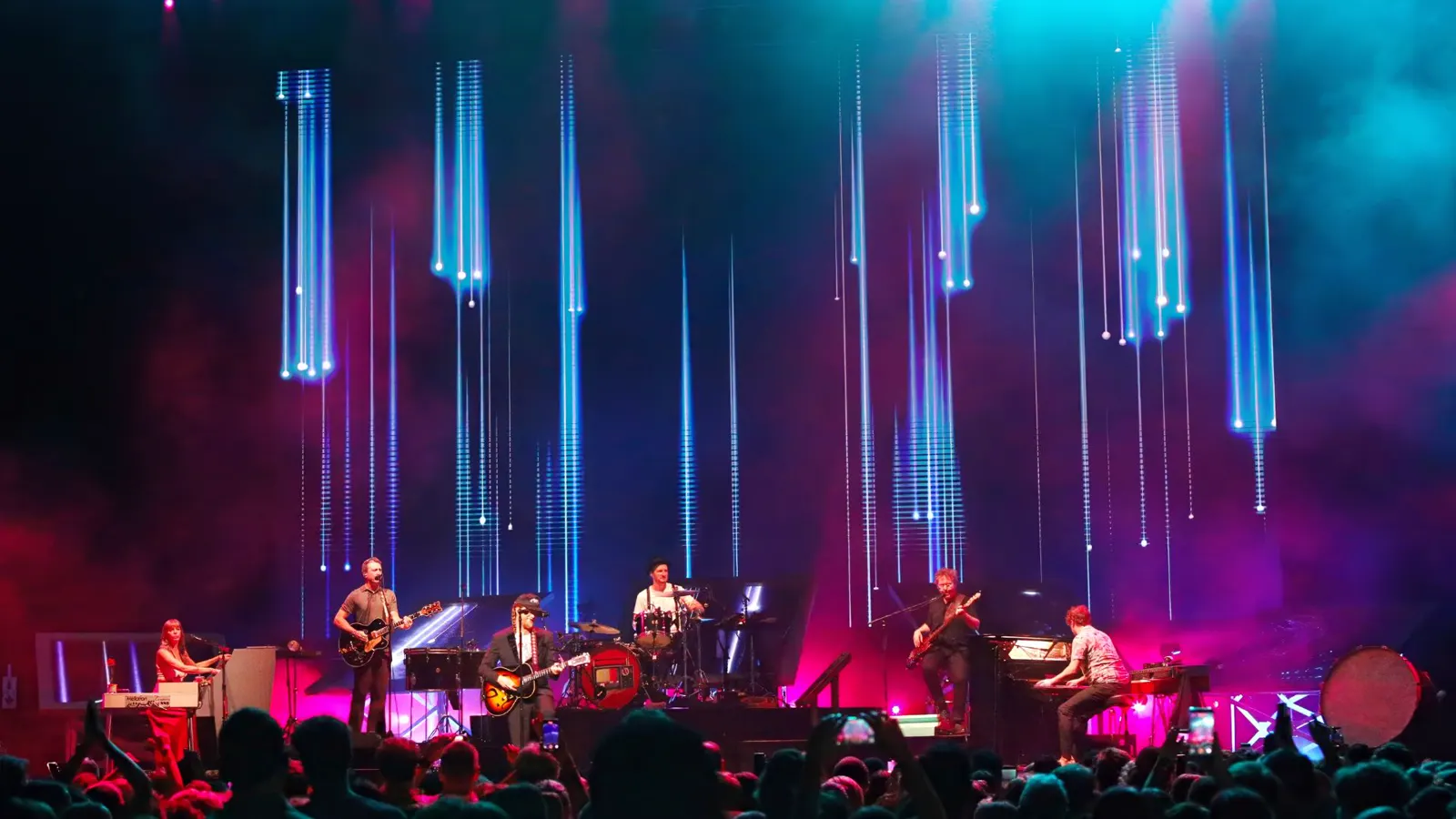
Every world-class live event is built on a technical foundation that most audiences never think about, and never need to. When the LED wall behind the stage explodes into colour on cue, when the screens flanking the stage cut to a tight close-up of the artist at precisely the right moment, when the lighting, the video content, and the audio all move together as a single unified experience, that is not magic. That is event production technology working exactly as it should.
For event managers, brand managers, and rights holders briefing major productions, understanding the core components of that technical stack matters. Not because you need to spec the equipment yourself, but because understanding what LED walls, IMAG, and show control actually do, and how they interact, helps you brief more clearly, set more realistic expectations, and recognise the difference between a production company that truly understands the technology and one that simply owns some of it.
Here is a clear breakdown of the three core pillars of event production technology at world-class scale, and how Mushroom Productions deploys them across festival mainstages, sports entertainment events, and major corporate productions.
LED Walls: The Visual Foundation of Modern Event Production
A decade ago, event visuals relied primarily on projectors and static backdrops. Both had significant limitations: projectors required controlled ambient light and suffered from wash-out in bright or outdoor environments, while static backdrops offered no flexibility once installed. LED walls changed both of those constraints fundamentally.
An LED wall is a modular display surface built from panels of light-emitting diodes. Unlike projectors, LED walls produce their own light, which means they perform in full daylight, in outdoor environments, and under the wash of production lighting without any loss of brightness or contrast. This combination of brightness, flexibility, and visual impact has made LED walls the dominant visual technology in large-scale live event production globally.
Pixel Pitch and Viewing Distance
The single most important specification decision in LED wall deployment is pixel pitch, the distance between individual LED pixels on the panel, measured in millimetres. Pixel pitch determines the minimum viewing distance at which the image appears sharp and seamless.
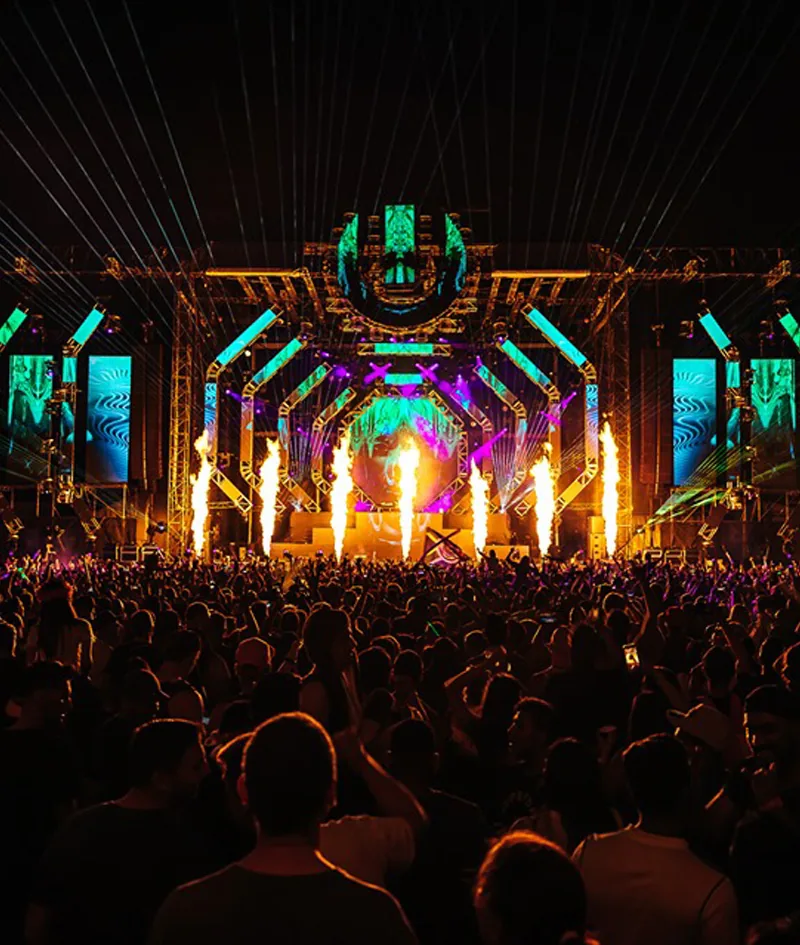
A fine pixel pitch of 2 to 3mm is appropriate for close-viewing environments: conference stages, corporate event sets, and indoor productions where delegates or guests may be seated within a few metres of the screen. A larger pixel pitch of 6 to 10mm is suitable for outdoor festival mainstages and stadium productions, where the audience is further away and the sheer scale of the display compensates for the lower resolution.
Specifying the wrong pixel pitch for a given application is a common and visible production error. An LED wall with too coarse a pixel pitch for its viewing distance produces a visible dot structure that breaks the illusion the display is meant to create. Getting this right from the outset is a core competency of an experienced event production technology team.
Modular Flexibility and Creative Configuration
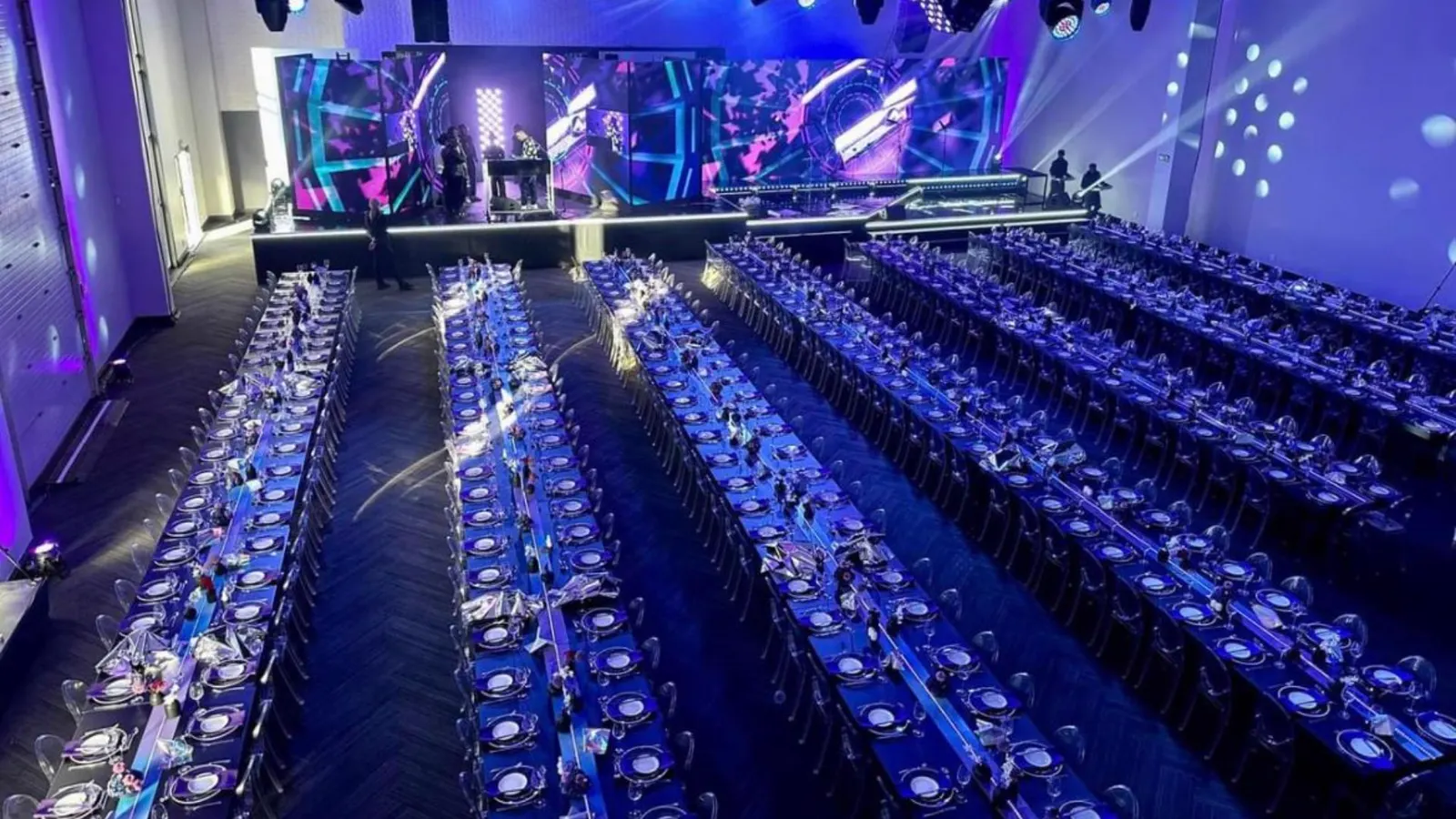
One of the most significant advantages of LED technology in live event production is its modularity. LED panels can be configured into almost any shape: floor-to-ceiling walls, angled side wings, curved surfaces, ceiling canopies, and floor installations. As a result, LED is not simply a display medium at the world-class level. It is a scenic and architectural element that shapes the spatial experience of the event.
At Mushroom Productions, our LED deployments for productions including the Basketball Africa League and major festival mainstage builds have used this modularity to create visual environments that extend well beyond a screen behind a stage, integrating into the full three-dimensional set design to create immersive visual experiences from every angle in the venue.
IMAG: Bringing the Stage to Every Seat in the Room
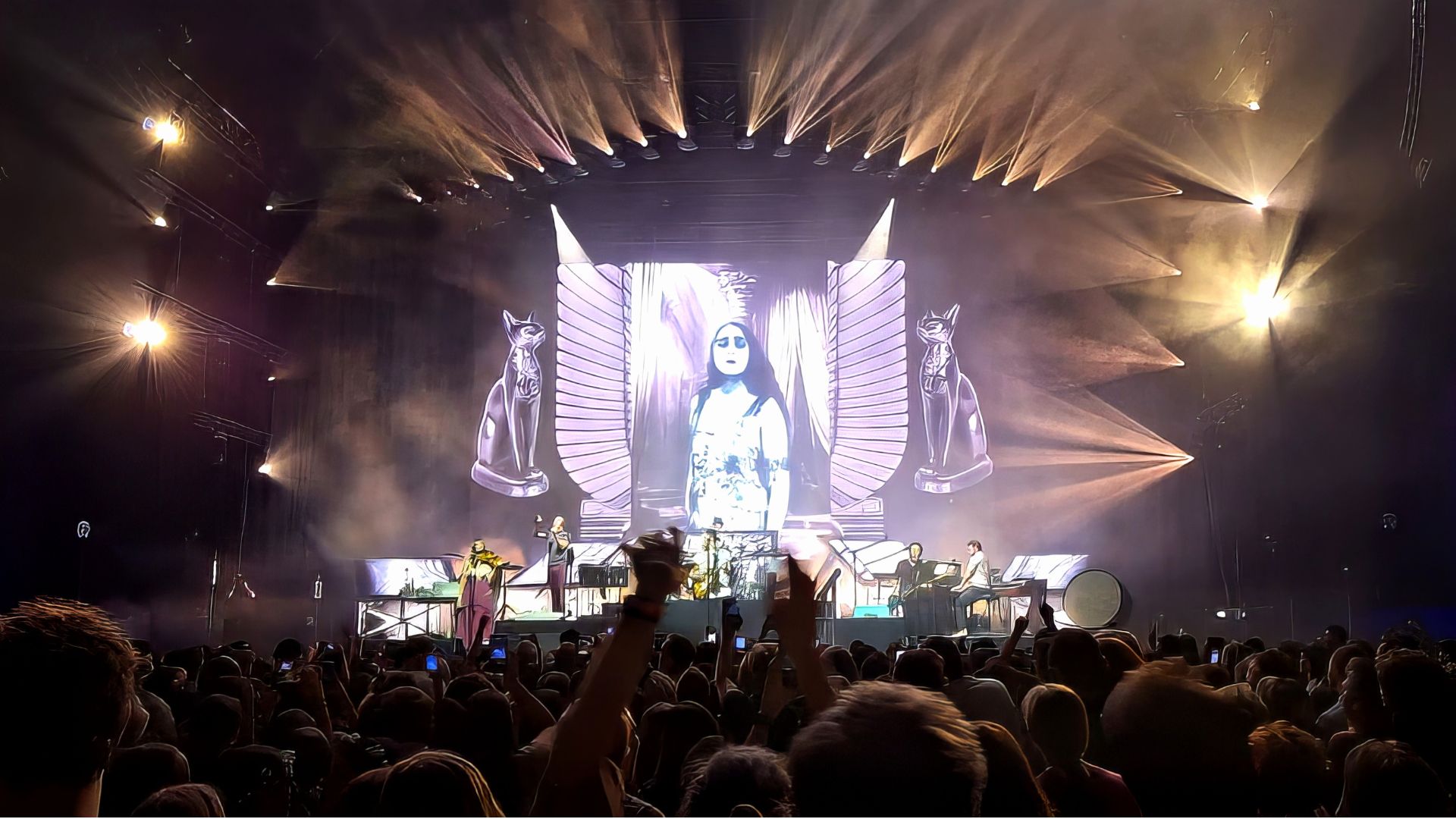
IMAG stands for Image Magnification. It is the live event production technique of capturing real-time camera footage of performers, speakers, or athletes and displaying it on large screens, so that every audience member, regardless of where they sit, can see the stage action in close-up detail.
IMAG was initially deployed only at massive concerts and the largest corporate events. Today, it is an essential component of the production toolkit for any large-scale live event, whether that is a stadium concert, a major conference, a sports entertainment production, or a brand activation with a significant audience.
The Camera Operation Behind IMAG
High-quality IMAG begins with skilled camera operators. Multiple camera positions, typically a central front-of-house position, off-axis angles, and roving handheld or track-mounted cameras, provide the cutting material that the vision mixer uses to build the live IMAG cut.
The vision mixer is the operator who cuts between camera feeds in real time, selecting the most visually compelling angle at each moment of the show. This is a craft in its own right, one that requires an understanding of the production's creative intent, the ability to anticipate performer movement, and the technical fluency to operate complex vision mixing hardware under live show conditions without error.
IMAG vs Broadcast: Two Different Requirements
It is important to understand that IMAG for the in-room audience and broadcast for streaming or recording audiences have different technical requirements. An IMAG cut optimised for a live in-room audience is cut faster and more dynamically than broadcast content designed for a home viewer. Lighting that reads well on the IMAG screens inside the venue may need adjustment for broadcast cameras. Separate camera positions and separate feeds are often required to serve both audiences properly.
Mushroom Productions' work on the Basketball Africa League is a strong example of this dual-requirement delivery. Our case studies reflect productions where broadcast-quality output and in-venue IMAG were delivered simultaneously, across multiple venues and markets.
Show Control: The Nervous System of a World-Class Production
Show control is the technology layer that ties every other element of a live event production together. It is the system through which a single operator, or a coordinated team of operators, can trigger, sequence, and synchronise all of the production's technical elements: lighting cues, video content, audio playback, pyrotechnics, automation, and more.
At the most sophisticated level, show control operates across a networked infrastructure that connects lighting consoles, video servers, audio playback systems, and automation controllers into a single coordinated system. A show control cue can simultaneously trigger a lighting state change, roll a video clip on the LED wall, fire a pyrotechnic effect, and release an automation element, all to a timecode that keeps every element frame-accurate.
Timecode and Synchronisation
The backbone of show control at world-class scale is timecode, a continuous time reference signal that all connected systems lock to simultaneously. SMPTE timecode, the industry standard, allows video content, lighting sequences, and audio playback to run in perfect synchronisation regardless of the complexity of the show.
For festival mainstage productions and large-scale corporate events, timecode-driven show control means that a pre-programmed show can run with frame-accurate precision from opening sequence to closing moment. For more dynamic productions, such as live music performances where the artist controls the pacing, show control operates in a more manual, cue-driven mode, with the show caller directing the team across headsets in real time.
The Show Caller
No discussion of show control is complete without acknowledging the role of the show caller, the production team member who calls every cue verbally during a live event. The show caller works from a fully annotated running order, communicating with every department head simultaneously through a production intercom system, and calling cues with enough lead time for each operator to prepare and execute.
The show caller is the most critical operational role in a live event production. A great show caller is invisible to the audience and invaluable to the team. Every moment that lands cleanly, every lighting state that hits on beat, every camera cut that catches the right moment, every video transition that feels seamless, reflects a show caller doing their job with precision.
How the Tech Stack Works Together
LED walls, IMAG, and show control do not operate as independent systems. They are deeply integrated, and the quality of that integration is what separates productions that feel unified from those that feel like a collection of separate technical elements running alongside each other.
Consider a keynote address at a major corporate event. The show caller cues the opening video package on the LED wall via show control. The lighting state shifts as the presenter walks on stage. The IMAG cameras cut to a wide shot of the presenter at the lectern, then to a tight close-up as they begin speaking. The LED wall transitions from the video package to a live IMAG feed on one panel, while a content slide appears on the flanking panels. The lighting tracks the presenter's movement. Every element responds to every other, in real time, under the direction of a single show caller and a coordinated technical team.
This level of integration requires not just excellent individual operators, but a production company with the systems, the communication protocols, and the rehearsal discipline to bring them together seamlessly. Our services are built around exactly this kind of integrated production delivery, at any scale, for any event type.
Frequently Asked Questions
What is the difference between an LED wall and a projector at a live event?
LED walls produce their own light, making them visible in any ambient light condition, including full daylight and outdoor environments. Projectors require controlled ambient light to maintain image quality and suffer from wash-out under production lighting. LED walls also offer greater modularity, allowing them to be configured into creative shapes and integrated into set design. For most large-scale live event production, LED walls are the preferred technology.
What is IMAG and when do I need it?
IMAG, Image Magnification, is the live capture and display of stage action on large screens, allowing every audience member to see the action in close-up regardless of their seat position. It is essential for any event where the venue size means that a significant portion of the audience cannot see the stage clearly with the naked eye. This typically applies to events of 500 or more attendees in large venues.
What does show control add to a live event production?
Show control provides the synchronisation layer that ties all technical elements of a production together: lighting, video, audio, pyrotechnics, and automation. It allows complex, multi-element production sequences to be executed with frame-accurate precision, and gives the show caller the tools to direct the entire production team from a single point of coordination.
How does Mushroom Productions use these technologies in its productions?
Mushroom Productions deploys LED walls, IMAG, and show control across the full range of productions we deliver, from festival mainstages and sports entertainment events to large-scale corporate conferences and brand activations. Our Basketball Africa League productions are a strong example of broadcast-quality IMAG and show control delivery at scale. Contact our team to discuss the right tech stack for your next event.
Ask Us About the Right Tech Stack for Your Event
Whether you are planning a festival mainstage, a corporate summit, or a brand activation, Mushroom Productions has the event production technology expertise, and the team, to deliver it at the highest level.
Get in touch to discuss your next production. Email info@mushroom.co.za or visit mushroom.co.za.