The Format Question Every Brand Eventually Has to Answer
Your annual conference is coming up. Your product is ready to launch. Your leadership team wants to host a flagship brand moment. And someone in the room asks: do we stream this, or do we go hybrid?
It sounds like a logistics question. It is not. It is a strategic one — and getting the answer wrong costs you either budget, audience, or both.
Live streaming event production and hybrid events are two distinct disciplines. They share technology but serve different purposes, carry different production requirements, and deliver different results depending on the objective, the audience, and the scale of the event. Understanding the difference is the first step to spending your production budget where it will do the most work.
This guide breaks down both formats — what they are, when each one is the right choice, what they cost in real terms, and how to make the call for your brand.
Defining the Formats
What Is Live Streaming Event Production?
Live streaming is the broadcast of an event — or a segment of an event — to a remote audience in real time. It can be as simple as a single-camera stream from a studio, or as complex as a multi-camera, broadcast-quality production delivered to thousands of simultaneous viewers across multiple platforms.
In a pure live streaming model, the event itself may have no physical audience at all. Think of a CEO address broadcast to a global workforce, a product announcement pushed directly to consumers via social media, or an industry keynote delivered from a production studio with no delegates in the room. The camera is the audience.
At its best, live streaming event production is lean, scalable, and shareable. It removes geography as a barrier entirely and allows a brand moment to reach an audience that no physical venue could accommodate. The content also lives on — recordings, cut-downs, and highlight reels extend the reach of the event long after the live moment ends.
What Is a Hybrid Event?
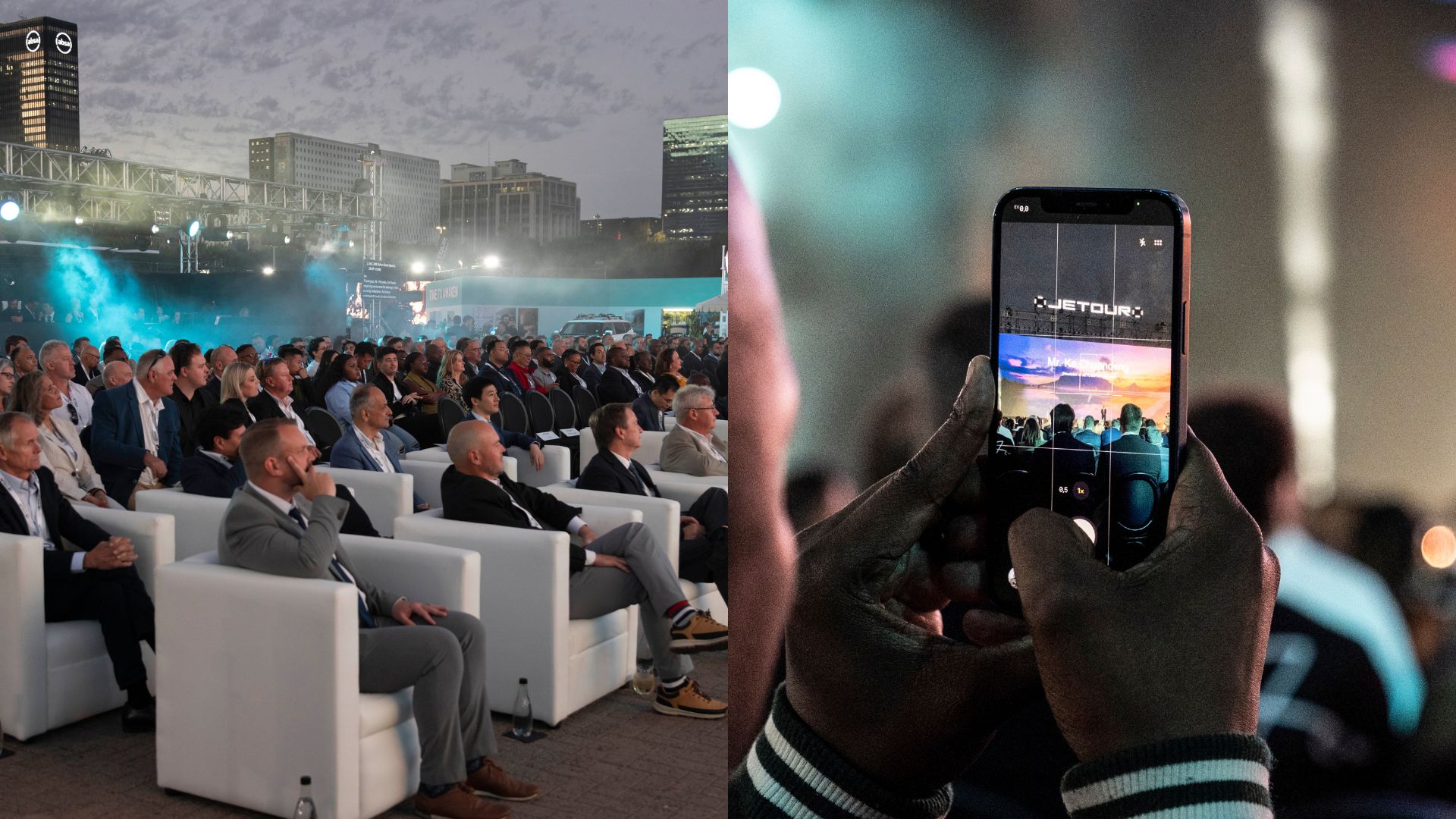
A hybrid event combines a physical live experience with a simultaneous digital broadcast for remote audiences. Both audiences exist in parallel: delegates in the room and viewers on screen, both experiencing the event in real time, ideally with equal intentionality.
The keyword there is intentionality. A hybrid event is not simply a live event with a camera at the back. It is a production designed for two audiences from the ground up — with content, pacing, engagement mechanics, and technical infrastructure planned to serve both the room and the screen simultaneously.
Done well, a hybrid event extends the energy and credibility of a live moment to an audience that could never be there in person. Done poorly, it gives the in-room audience a great experience and the online audience an afterthought.
The Case for Live Streaming
Live streaming event production earns its place when the priority is scale, speed, and content longevity over in-person experience depth.
Reach Without Limits
A live stream reaches anyone with a device and an internet connection. There is no venue capacity ceiling, no travel budget, no guest list to manage. For brands communicating across multiple cities, countries, or continents — as is common for South African companies operating across the African continent — streaming removes the structural barrier to audience size.
Industry data supports this: brands that live stream product launches report measurably higher immediate conversion rates compared to pre-produced video launches, with the real-time element driving engagement that recorded content cannot replicate.
Content as a Long-Term Asset
A well-produced live stream does not end when the broadcast does. The recorded content becomes raw material for a suite of derivative assets — highlight reels, social cut-downs, behind-the-scenes clips, and on-demand replays that continue generating value for weeks after the event. According to research by the Content Marketing Institute, B2B marketers generate an average of 6.3 new pieces of content from each virtual or streamed event — making live streaming one of the highest-yield content investments available.
Budget Efficiency
Without the venue, catering, logistics, and delegate management costs of a physical event, a well-produced live stream can deliver significant production quality at a fraction of the cost of an equivalent in-person experience. For brands that need frequency — quarterly updates, ongoing thought leadership series, regular stakeholder communications — streaming is the format that scales without the overheads.
When to Choose Live Streaming
- Your audience is geographically dispersed and attendance in person is not feasible
- The priority is reach and content generation over in-room experience
- The event repeats frequently and budget efficiency matters across a series
- The message is informational rather than experiential — a briefing, an announcement, a training
- Your audience has a clear digital home (a platform, an intranet, a social channel) where the stream will land naturally
The Case for Hybrid Events
Hybrid event production earns its place when the physical experience is core to the brand moment — but the brand cannot afford to limit that moment to the people in the room.
The Room Still Matters
Live events remain the most emotionally resonant format available to brands. Freeman’s 2025 Trust Report found that in-person events continue to have a strengthening positive effect on how audiences think and feel about brands — a finding that cuts against any instinct to replace physical events entirely with digital alternatives.
When a launch, a gala, an award ceremony, or a flagship conference carries real weight — when the energy of the room is part of the brand story — a pure live stream cannot replicate that. The hybrid model allows the in-room experience to remain intact while extending it to a broader audience through broadcast.
Scale and Exclusivity Coexist
Hybrid events solve a real tension for brands. The most impactful events are often the most exclusive — curated guest lists, intimate venues, high-production environments designed for a specific audience. But exclusivity limits reach. Hybrid removes that constraint. The inner circle gets the full live experience. Everyone else gets a broadcast that, if produced well, communicates the same standard and the same message.
For a product launch, a hybrid format can serve a VIP dealer or media audience in the room while simultaneously reaching a consumer or stakeholder audience at scale. Both groups receive a version of the moment appropriate to their relationship with the brand.
Audience Data and Engagement
A physical event tells you who attended. A hybrid event tells you who attended, who watched, for how long, what they engaged with, and what they skipped. The digital layer of a hybrid production generates audience insight that a purely physical event cannot capture. For brands that need to justify production investment to leadership, this data is increasingly essential. Research from Bizzabo’s 2026 State of Events Report shows that teams tracking integrated event analytics consistently outperform those relying on manual post-event reporting.
When to Choose Hybrid
- The in-person experience is central to the brand statement and cannot be compromised
- You need to extend reach to a secondary audience without diluting the live event
- Audience insight and engagement data are required outcomes, not nice-to-haves
- Stakeholders, leadership, or international partners need access without being physically present
- The event has content that lends itself to broadcast — keynotes, reveals, performances, presentations
The Production Reality: What Each Format Actually Costs
Both formats are more complex — and more expensive — than they appear from the outside.
Live Streaming Production Costs
A broadcast-quality live stream requires significantly more infrastructure than pressing “go live” on a phone. At the level required for corporate or brand events, this includes multi-camera capture, broadcast mixing, graphics and lower-thirds, audio engineering, platform management, and often a dedicated production director calling the show in real time.
Connectivity is a cost that is frequently underestimated, particularly for events in African markets outside of major metropolitan areas. Reliable, redundant internet connectivity for a live broadcast requires dedicated bandwidth solutions — not venue Wi-Fi.
Hybrid Event Production Costs
Hybrid events carry the full cost of the physical event — venue, staging, AV, catering, logistics — plus the additional layer of broadcast production on top. The two do not share infrastructure beyond the venue itself.
This is where hybrid events most often disappoint: when a brand treats the streaming component as a budget line item bolted onto the physical production, rather than as a parallel production with its own audience, its own crew, and its own technical requirements. A camera at the back of the room is not a hybrid event. It is a live event with a neglected afterthought attached.
To understand how production costs map to outcomes — and how to build a budget that serves both the room and the screen — our corporate event services page outlines how Mushroom Productions approaches end-to-end event production across both formats.
What the Data Says About Both Formats in 2026
The event industry has settled into a clearer view of where each format performs:
- Nearly half of all corporate events now take a hybrid format, reflecting the widespread acceptance of blended delivery
- 77% of marketers rate events — in any format — as the most effective marketing channel available to them
- 74% of B2B event organisers report positive ROI within six months after a virtual or streamed event
- 84% of event attendees say live events improve their understanding of a product or service — underscoring why the in-room experience remains irreplaceable for complex or considered purchases
The pattern that emerges from these numbers is consistent: live streaming wins on reach and content efficiency; in-person and hybrid events win on emotional impact and product comprehension. Brands with layered objectives — reach and impact, scale and credibility — often find the answer in hybrid. Brands with clear single objectives often find the answer in live streaming.
Making the Call: A Framework for Brand Managers
Before committing to a format, work through these questions:
What is the primary outcome? If the answer is reach or content, lean toward streaming. If the answer is impact, conversion, or relationship-building, lean toward hybrid or in-person.
Who is the audience, and where are they? A geographically dispersed workforce needs streaming. A curated VIP audience spread across a continent may need hybrid.
What is the budget reality? A hybrid event built to the standard it requires — with proper production for both audiences — costs more than most initial estimates. If the budget cannot support a quality hybrid experience, a well-produced live stream will outperform a poorly executed hybrid every time.
What does the content require? A product with tactile or experiential qualities needs an in-room component. An informational briefing or leadership address can work purely as a stream.
What content will you produce from it? If post-event content strategy is part of the plan, build the capture approach into the production budget from the start — not as an afterthought.
Mushroom Productions has produced events across both formats — from broadcast-quality live streams for corporate clients to full hybrid productions for major brand moments. Our case studies show what is possible when the format is matched to the objective and the production quality matches the brand standard.
We also work in close partnership with Skyroom Live for broadcast-quality digital delivery — giving our clients access to streaming infrastructure that meets the technical demands of both B2B and B2C audiences at scale. Explore our full range of live streaming and event production services to understand how we approach digital delivery.
For a deeper look at how hybrid event production is evolving in 2026 — including the shift toward smarter content capture and audience-first streaming strategy — this production guide from EMS Events is a useful reference for brands building their event strategy.
The Bottom Line
Live streaming and hybrid events are not competing formats. They are tools — each suited to specific objectives, audiences, and budgets. The brands that get the most from their event production investment are the ones who choose the format that fits the job, and then execute it at the standard it demands.
The question is never just “stream or hybrid?” It is: what do you need this event to do, and what is the best format to make that happen at the level your brand deserves?
If you are working through that decision for an upcoming event, we would be glad to help you think it through.
Talk to the Mushroom Productions team today.