Every corporate event starts with a number. A budget figure agreed in a boardroom, circulated across a planning team, and held up as the ceiling against which every decision will be measured. The problem is that the number is almost always wrong — not because decision-makers are careless, but because corporate event budget planning is genuinely complex, and the costs that cause the most damage are the ones no one thought to include at the start.
Industry data bears this out. According to research on hidden event planning costs, 65% of event planners experience budget overruns — averaging approximately 20% over the original figure, with some analyses placing the gap between planned and actual costs closer to 27–28%. These overruns cluster in predictable places: production labour, technical equipment, venue overtime, and last-minute logistics changes.
South Africa's MICE (Meetings, Incentives, Conferences and Exhibitions) industry was valued at US$6.6 billion in 2023 and continues to grow. The appetite for high-calibre corporate events is strong and rising. But appetite without accurate budgeting leads to compromised events, strained supplier relationships, and internal conversations nobody wants to have after the fact.
This guide breaks down the real cost of a corporate event — the line items that belong in every budget, the hidden costs that don't always make it in, and how working with the right production partner changes the financial picture entirely.
The Core Cost Categories Every Event Budget Needs
Before addressing what gets missed, it helps to understand the full cost architecture of a well-planned corporate event. There are two categories of expense that every budget must account for: fixed costs that remain constant regardless of attendance, and variable costs that scale with headcount and scope.
Fixed costs are the commitments you make early and the ones that are hardest to reverse. Variable costs give you the flexibility to adjust as the event takes shape. Both need to be forecast accurately from the outset — because the line between them often blurs in execution.
Venue
The venue rental fee is the number most companies start with — and stop at. What the rental fee rarely includes: technical infrastructure access, rigging points, overtime charges if setup or bump-out runs long, cleaning and waste removal, room resets between sessions, and security deposits. Reviewing the venue contract line by line before signing is not optional. Each of these add-ons can materially affect the final invoice.
Production and Technical
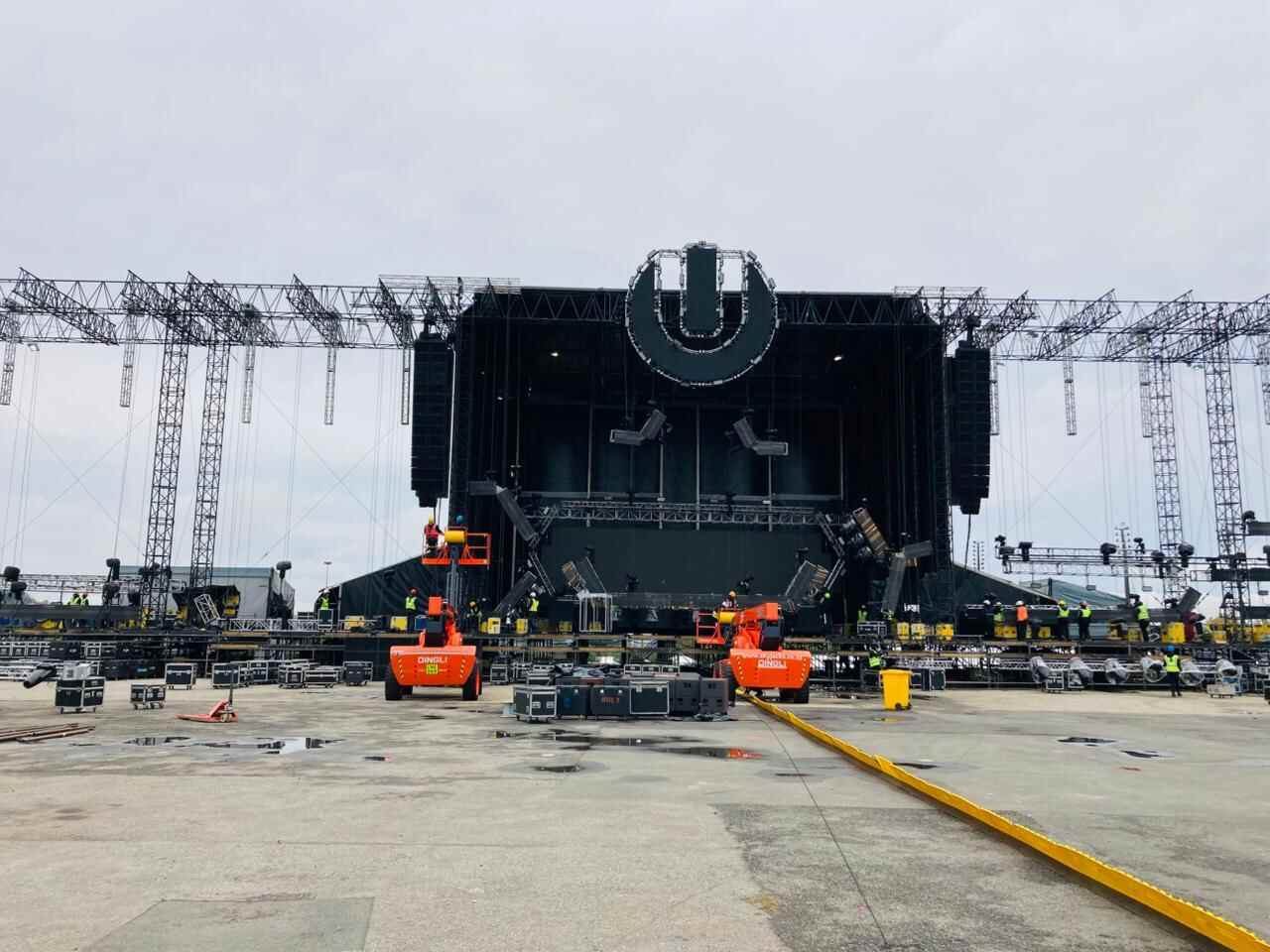
For any corporate event that takes production seriously, this is where the majority of the budget lives. Sound systems, lighting rigs, LED screens and walls, staging, rigging structures, generator hire, cabling and power distribution — each of these is a separate cost centre, and each requires experienced technicians to install, operate, and dismantle safely.
What this means in practice is that production costs must be scoped properly against the event brief — the technical requirements of the show determine the specification, and the specification determines the cost. These are not figures that can be estimated from a standard rate card. Every event is different, and accurate production budgeting requires a detailed brief and itemised supplier quotes before any number is committed.
Catering and Hospitality
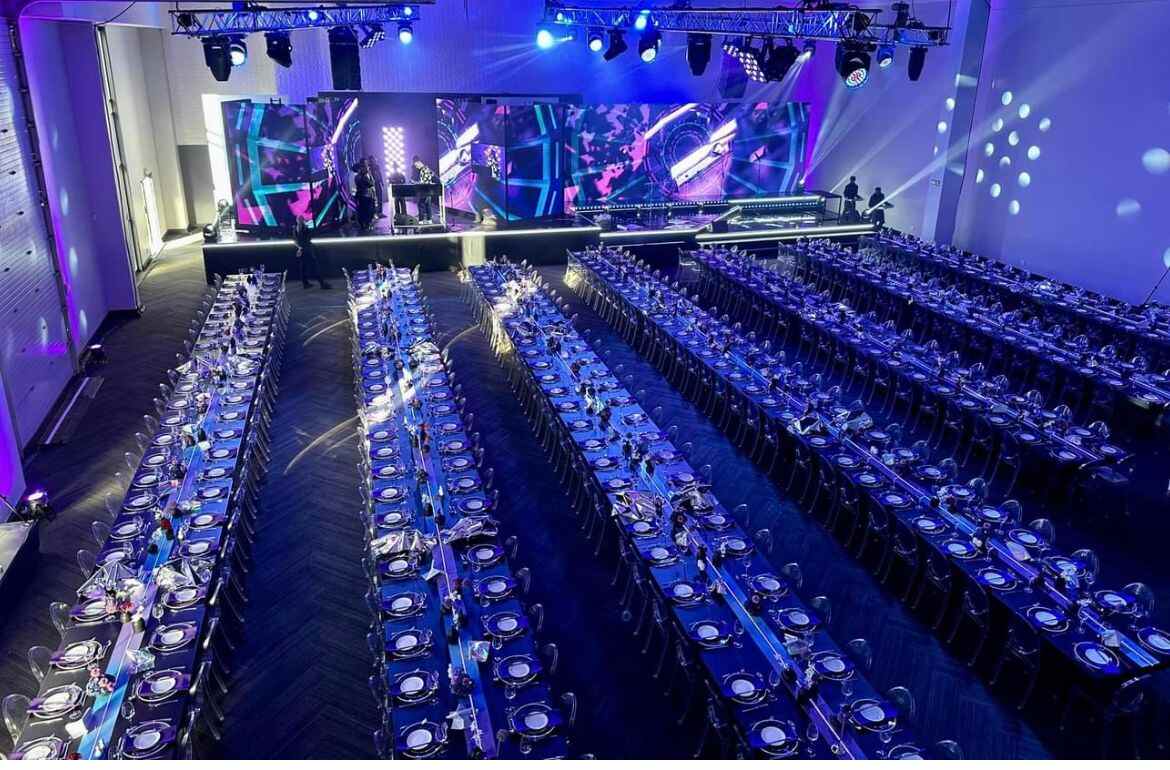
Per-head catering costs are the most visible variable in a corporate event budget, but they rarely represent the full hospitality spend. Service charges, staffing fees, equipment hire, beverage minimums, and setup costs all sit behind the headline per-person figure — and at premium South African venues, the gap between the catering quote and the final hospitality invoice can be significant. Budgeting accurately for this category means understanding every line item behind the per-head figure, not just the headline number.
Talent, Entertainment and Speakers
Appearance fees for keynote speakers, award presenters, MCs, or entertainment acts are the line item companies budget for. What they less consistently budget for: travel and accommodation, technical riders (specific AV requirements that may require additional equipment hire), rehearsal time, and the production cost of integrating the performance into the show flow seamlessly.
The Hidden Costs That Derail Corporate Event Budgets
The most experienced event planners know that the budget is not the quote — it is the quote plus everything that wasn't in it. The hidden costs that consistently catch corporate clients off guard fall into a few recurring categories.
Labour and Crew
Event production is labour-intensive, and labour is one of the most consistently underestimated line items in corporate event budgeting. Crew call times, overtime rates, travel costs for crew working away from home base, and show-caller fees all add up. For large-scale corporate events, the crew roster can run into the dozens — riggers, audio technicians, lighting operators, stage managers, runners, and more.
Permits, Licences and Compliance
Entertainment permits, health and safety compliance documentation, fire safety sign-off, crowd management plans, and noise licences are not glamorous budget items — but missing or delaying any of them can shut an event down or result in material fines. These costs belong in every corporate event budget from day one, not as an afterthought.
Contingency
Industry best practice is consistent on this point: a contingency buffer of between 10% and 15% of the total budget should be built in as a visible line item from the outset. Not as a vague reserve, but as a formal allocation. According to event budget planning guidance from Exhibit Concepts, this buffer is what gives you room to address unforeseen needs without compromising the quality of the event or scrambling for approvals on the day.
Post-Event Costs
Bump-out, cleanup, waste disposal, damage assessments, venue reinstatement, and content editing for post-event footage are all costs that occur after the event has happened and after the celebration has faded. They are easy to omit from initial budgets and difficult to absorb when they arrive as surprise invoices.
What World-Class Production Actually Costs
The instinct to minimise production costs in a corporate event budget is understandable — it can feel like an area where quality is negotiable. It is not. Production quality is the single biggest determinant of how an event lands: how the audience feels in the room, how the content reads on screen, how the brand is perceived by everyone in attendance.
An underpowered sound system turns a polished keynote into a frustrating listening experience. Poor lighting makes a premium gala dinner feel flat. An LED wall that's been under-specced for the room undermines every piece of content it displays. These are not minor aesthetic issues — they are the difference between an event that achieves its objectives and one that falls short.
This is precisely why Mushroom Productions approaches every corporate brief with full production scope in mind. Our corporate event services cover everything from initial concept and technical design through to show-calling and post-event logistics — with transparent cost scoping built into the briefing process from day one.
How a Production Partner Changes the Budget Conversation
The most common budgeting mistake in corporate event planning is treating production as a procurement exercise — sourcing individual suppliers against line-item quotes without understanding how those elements interact in a live environment.
An experienced production partner brings a fundamentally different perspective. Rather than quoting line items in isolation, they scope the event holistically: what the technical brief requires, where costs can be optimised without compromising the outcome, and where cutting corners will cost more in the long run than investing properly at the outset.
They also bring supplier relationships that translate into real-world cost advantages — negotiated rates, preferred access to equipment, and the logistical efficiency that comes from running productions at scale. For a company planning one or two major events per year, this expertise and these relationships are simply not available in-house.
Our case studies show what this looks like in practice: events delivered at the highest production standard, on brief, on budget, with no unwelcome surprises at reconciliation.
Building a Corporate Event Budget That Actually Works
A corporate event budget that works is not simply a list of anticipated costs. It is a dynamic financial document that is built against a clear brief, updated in real time as the event takes shape, and stress-tested for the scenarios that are most likely to cause overruns.
The principles that separate budgets that hold from budgets that blow out:
- Start with a detailed brief before any numbers are committed — scope drives cost, not the other way around
- Break every category into fixed and variable components from the outset
- Get itemised quotes, not ballpark figures, from all key suppliers before finalising the budget
- Build a contingency allocation of at least 10–15% as a formal line item
- Include post-event costs — bump-out, cleanup, content editing, reporting — from day one
- Review and update the budget at every key planning milestone, not just at sign-off and reconciliation
Applying these principles consistently, in partnership with a production team that understands the full cost landscape, is what separates corporate events that stay on budget from those that don't.
To start planning your next corporate event with full financial transparency, visit our venue scouting and event design services or get in touch with our team directly.
Frequently Asked Questions
What percentage of a corporate event budget should go to production?
This varies significantly based on event type and scale, but production — covering staging, sound, lighting, AV and technical crew — commonly represents 30–50% of total event spend for large-scale corporate events. Premium production is a direct investment in the quality of the audience experience and should not be the first line item to be cut.
How much contingency should I build into a corporate event budget?
Industry best practice consistently recommends a contingency buffer of 10–15% of total event spend, set aside as a formal budget line item from the outset. For events with a high degree of technical complexity or outdoor elements, building towards the upper end of this range is advisable.
What are the most commonly overlooked costs in corporate event planning?
Labour and crew overtime, venue add-on charges (rigging access, cleaning, overtime penalties), permits and licences, artist technical riders, post-event bump-out and cleanup, and content editing for post-event footage are among the most consistently underestimated or omitted line items in corporate event budgets.
Why do corporate event budgets so often go over?
The gap between planned and actual costs in event planning typically clusters in labour, catering service charges, last-minute equipment additions, and transport changes. Budgets that are built without itemised supplier quotes — or without a formal contingency allocation — are most vulnerable to overruns.
Plan Your Next Corporate Event With Full Budget Transparency
Mushroom Productions brings 30 years of end-to-end corporate event production experience to every brief — including honest, transparent cost scoping from the first conversation. No surprises at reconciliation.
Talk to our team about your next corporate event.
Get in Touch With Mushroom Productions
Email: info@mushroom.co.za
Website: mushroom.co.za